Thursday, December 20, 2012

Visual Techniques


Eames Lounge Chair and Ottoman
visual terms:
-balance
-harmony
-neutrality
-bold
-depth


George Nelson Ball Clock

visual terms:
-symmetry
-simplicity
-accent
-repetition
-randomness

Summary:
     Both of the images above are of two very famous product designs by world renowned industrial designers. The first image is of the Eames Lounge chair, developed by Charles and Ray Eames. The second image is of George Nelson's signature ball lamp. These two piece are both from the product design world yet have varying key aspects to them. I would say that the Eames lounge chair is both harmonized and balance, first by the combination of the dark warm wood with the soothing satin leather, second by the general shape as soft nature of the form. The lounge chair also has multiple aspect which I would say make it rather bold. The Eames lounge chair is very different compared to the Nelson Ball clock. Several aspects of the clock include, obvious symmetry. Other visual techniques include accent, which is created by the colored wooden balls; repetition, which is created by the repeating placement of the ball extensions; and randomness, based of the non-sequential colored order of the wooden balls. Overall, there are many visual techniques which are signature to each individual piece. 

Thursday, December 6, 2012

Product Design- Motion/Movement


Product Design - Implied Motion

1. StrandBeests
Here is a product that was designed and fabricated by Theo Jansen. He, in his own words is "creating new forms of life". This mechanic design is a wind propelled machine that simply walks up and down the beach.  The implied motion here lies within the mechanics and movement of the Strandbeests, "beach beast".  if you look at the wings on the beast, the look as if they are fluttering with the wind, and if you look at the feet, they look as if one is ready to take a step right after the other. While we cannot see motion taking place, the implied motion is seen in the stillness and held position of the object. "His mechanical creatures, the Strandbeests, are comprised of hundreds of yellow plastic tubes forming a skeletal structure that is able to walk along the beach with only the help of the wind....he is looking “to put these animals out in herds on the beaches so they will live their own lives.” 
Source:
http://blog.archpaper.com/wordpress/archives/tag/walking-machines

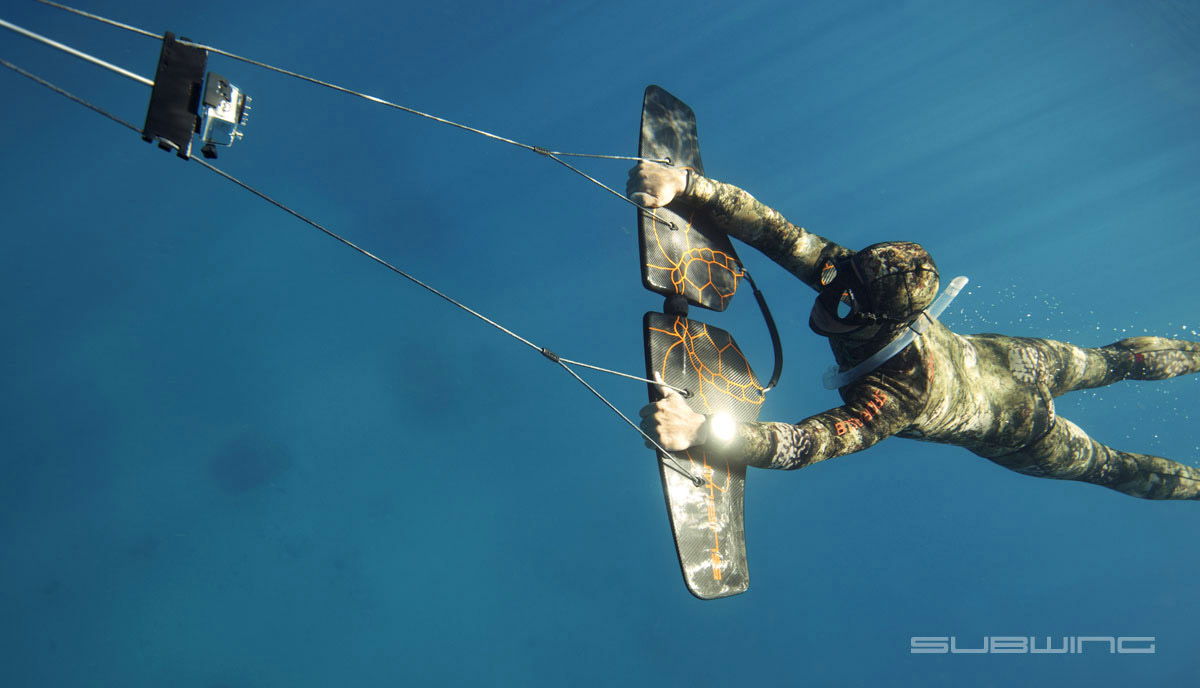
2. Subwing
 
This is a new concept which I heave previously heard about being a diver myself, but the Subwing is a much more though out and improved version of the other underwater exploration devices that I've seen in the past. The Subwing is a simple and unique concept which allows people to explore the underwater terrain of the environment. It's unique shape gives it the appearance of a wing, the suggestion that using it could make you feel as free as a bird. Another aspects is the pivot section in the middle of the wing to optimize the maneuverability in the water. Subwing works by being towed being some sort of watercraft while to user holds onto the wing and because of its movement, the user is allowed the freedom of a dolphin, and the ability to plunge, turn, and twist to great depths. 
Source:
http://www.charterworld.com/news/subwing-superyacht-toy-redefinds-underwater-fun


Thursday, November 15, 2012

Tone and Color

Photo of the interior space of the Eames' Case Study House #8
How Tone is Operating:
One aspect that I fondly admire of architects and designers, particularly around the mid-century, is their use of tone is a room or piece. In this photo, the tone of the room is made by natural sunlight reflecting off the walls in the interior of the house, creating a very rich and warm environment.
How Tone is Interacting: 
Key aspects that affect the tone in this photo of the Eames home is the wood interior, and the slight combination of a natural setting. Both of these elements combined transform the area; making an entirely natural setting out of something entirely unnatural.
How Color is Operating: 
Much of the color found in the house contains very natural hues. The uses of the natural and warming earthy color gives off a very neutral atmosphere. As you can see in the picture, Eames has chosen colors such as the various shades of green, warm browns, and creamy whites.
How Color is Interacting:
Much like how tone is interacting, color is doing the same. By placing various shades of natural colors, the combinations of open area within the house, and the natural light and natural elements of color, Eames creates an atmosphere wherein the house feels very natural, yet tamed.

Thursday, November 8, 2012

Product Design Elements

Shape:
Shape is, for me, a very important element to design. All design is created using shapes, without which design would have no form, and the world would have no form. Shape can either be regarded as geometric shapes, or the shaping of a material or object. Shape is the anchor of all form and relationships.

Movement:
I believe that movement is a very important aspect of design for many reasons. Movement is important because it is one of the most dominant forces in human experience. Movement is an aspect of design it is able to be felt and seen; for both functional and aesthetic purposes. Movement is often related to progression or change, from one state to another.

Scale:
Scale is another key aspect of design for me. The image above is a photo of a house in the desert. The original inspiration for the design came from the idea of a sushi roll. What the designer had created essentially in this house, was a large sushi roll, and it was all done through the use of scale. Scale is very important to design because it has the ability to manipulate the design's relativeness to its environment. Scale is also important because it can represent a balance, and a constant interaction in design.


Thursday, November 1, 2012

Visual Thinking Research

-How many triangles can you find in this picture?
      A friend and I sat down to try to solve this visual problem. Initially, we both started with a top down analysis of the picture. Staring at the top, we worked ourselves down, making sure not to miss anything. We counted out how many triangles that we found, 16. After looking over the cat again, we were sure that our answer was correct. What my friend and I had failed to take into account was the combination of triangles that also formed triangles themselves. The final answer was 20.
http://www.puzzles.com/PuzzlePlayground/Cat/Cat.htm

Count how many perfect squares of all possible sizes are hidden in the cross of dots above. A square is counting if any four dots are placed exactly in its respective corners.
       With the same friend from the previous visual test, we sat down to try to conquer another. We employed the same technique as the first puzzle, top down visualization. After that process, we both had tried to find more squares, knowing that there would be more. What we had failed to do was to find more squares by looking at the cross of dots from an angle. Initially we found 9 squares. After looking at the solution, we realized that there were 21 perfect squares. 
http://www.puzzles.com/PuzzlePlayground/HowManySquares/HowManySquares.htm

Thursday, October 18, 2012

Feature Hierarchy: Bop It

I chose the 'Bop It' as a product design examples that has characteristics of feature hierarchy.
      One of the first features that I notice about the children's toy is its color. Each color represents a different action that the user must accomplish. Another hierarchy feature includes the size and shape of the particular button associated with the task that the user must complete. The green figure requires you to flick it, so it's shape and orientation looks like a vibrating peg, the yellow looks like a twister and requires the user to twist it, the red looks like a wheel and requires a spin from the user, and the blue looks like a tab and requires the user to pull the tab, the purple center requires a push/bop.  Overall, the spatial layout of the device allows the reader to use both hands to hold onto the 'Bop It' and have easy access to the required tasks. I think that the 'Bop It' is a prime example of this week's lecture because it has ample hierarchal visual features.

Thursday, October 11, 2012

Visual Perception: Top-Down Processing

    I chose this image because I think that it is a great example of Top-Down visual processing. Top-Down processing involves goal-based visual fixation. In our daily lives, if we do not know where to go, we really on a GPS. A GPS is made for the user to constantly look at it in order for it to provide punctual and effective feedback for use in the external environment. Top-Down visual processing is categorized by goal-directed eye movement, and a constant looping cycle between action and cognition. A GPS embodies both of those aspects; we really at the GPS to provide us with timely feedback on route to the destination/goal, and the information that is constantly provided to the user must be turned into action, creating a constant loop until the goal and/or destination is achieved and/or reached. Any GPS is a great example of Top-Down Visual Perception.

source of image:
http://www.o-digital.com/uploads/2101/2204-1/4_3inch_Car_GPS_8_315.jpg

Thursday, October 4, 2012

Syntactical Guidelines: Success and Failure

My interest as a design major is in Product Design. I tend to focus more particularly on mid-century design, however I like to also focus on mid-century graphic design as well. I find the designs to be unique and iconic, some of which have inspired the path, mentality, and design aspects of product designers today.

Example 1: Success
The Nagasaki Chair
I would view this design as a success. This is a new made design by Mathieu Mategot. This chair carries many qualities found within the syntactical guidelines. The chair is visually balanced; cut it vertically and it will be the same. The viewer can see that the design carries simple and structural qualities. I would say that this chair has more leveling qualities than sharpening; the struts, the frame, the shape and form of the chair, all are balanced and equal. I think that the form and color of the chair represent an attracting quality as well; the design has fluidity.

Example 2: Not Successful (not as successful)
Mobilis Lounge Chair
I would say that this design is not as successful. The chair was designed by Marcel Wanders. It has less qualities of the syntactical guidelines than the other example, the Nagasaki Chair. This chair is not balanced, and it is actually less balanced depending on the user. This chair has a swinging seat that can be used by flip the chair over its base, so there are two functions; upright seating and lounge seating. I would say that this chair also has more stressful qualities to it, that create a more chaotic perception of this chair. I think that because there is no balance to the chair, a sense of dynamic stress is created by the form of the chair. While it is still a chair, I think that compared to the qualities of the Nagasaki chair, this design is not as successful. Not to mention that it is impractical, expensive, and ugly, through my eyes.


Thursday, September 27, 2012

Visual Vs. Symbolic Lanuage


This photo contains a lot of visual language. Initially we see a young boy dressed in a suit, crying. Behind the boy are standing figures with hands crossed, in formal attire; suits and uniforms. In front of the boy is a Naval officers of some sort, kneeling in front of the boy with a folded American flag in his hands. The Officers is dressed in his formal attire, with a white officer's cap, and white gloves. Just from these basic descriptions, the viewer may have the idea that the setting for this photo may be a funeral. The boy might be a son or relative of a soldier or officers. The Naval officer may be handing the boy a flag, commemorating his parent's/relative's, as a sign of great servitude to the country.

Responses:
Dispair, Sadness, Loss, Support, Commemoration, Ceremony, Tears

Symbols:
Folded Flag- shows patriotism, possible loss of a soldier, appreciation for servitude
Naval Officer (Hat and Gloves)- formal attire, shows that ceremony is for the armed forces

I think that the visual and compositional structure really ties the image together. The feeling of loss, sadness and dispair are all feelings that we can see through the young boy crying in the image. The visual responses of commemoration and ceremony are in response to the individuals in the image and the folded flag; The Naval Officer is represented in the image as someone that is giving support to the boy, consoling the boy for his loss, and the flag symbolizes the bravery of servitude for the fallen soldier, commemorating him/her. 

Thursday, September 20, 2012

Interactions Between Three Levels of Meaning: Abstract, Representation, and Symbolism


    This is an illustration created by Charles Harper from the book, An Illustrated Life, circa 1950. Charles Harper has a very unique style that appears quite evident in his work. He's  been regarded as "a master of Mid-Century Modernism", and has referred to his own work style as "minimal realism". I think that this illustration is a perfect example of all three levels of meaning: Abstract, Representation, and Symbolism. 

Representation:
    One can easily deduce that this is indeed a fish. Its is in-fact a representation of a Rainbow Trout. The image shows visual details such as the shape, form, and colors of a Rainbow Trout. Besides the fact that the image specifically shows what type of trout it is, the image is a representation of a trout, and of all fish. The illustration carries large amounts of visual details. It is a representation which is categorized based on the knowledge and experience of the viewer. Based on my knowledge and experience, the fish is a Rainbow Trout, but to the viewer that doesn't know those details, its is just any other fish.

Abstract:
    The picture is obviously not an exact image of a rainbow trout as if we were to see it with our own two eyes, it is an abstract drawing. When asked about his style, Charles Harper responded:  "When I look at a wildlife or nature subject...I see exciting shapes, color combinations, patterns, textures, fascinating behavior and endless possibilities for making interesting pictures. I regard the picture as an ecosystem in which all the elements are interrelated, interdependent, perfectly balanced, without trimming or unutilized parts". The image can be broken down to simple shapes and natural colors, very bare elements. Needless to say, Charles Harper combines these shapes and colors that gives the image a deep artistic and realistic feel. 

Symbolism:
    I believe that this image carries some symbolic references. Taking the whole image into account, and not just the fish, we can see several iconic graphical symbols, from which their form suggests their meaning. The first two parallel in meaning: the net and the fishing hook (fly). Both suggest fishing. The third form is the water underneath the fish. The shapes of the water and the splashes, as well as the different color of the water, light blue vs. white, created by the trout may suggest that the trout is located in a river, turmoil water. The fourth symbol is the fish. The form of the fish clearly depicts the body, fins, and tail of the fish. 

    I believe that based on the examples shown, this image of a Rainbow Trout, illustrated by Charles Harper clearly shows signs of all three levels of meaning: Abstract, Representation, and Symbolism.

Thursday, September 13, 2012

Representational, Abstract, and Symbols


Representational: 
    The representational I chose was a picture of my dog. I think that everyone knows and can relate to a dog.  The picture is a direct representation of George, the dog. But the image also represents all dogs. The image is something that can be easily categorized due to it being extremely detailed and of something that we can directly recognize form the environment.

Abstract:
      The abstract image that I chose was a combination of different aspects. Initially, the we can we see that the image is pure abstract; it creates a visual experience. The second abstract aspect of the image is that it is a concept based image, based of the concept of a subway. The third aspect is that the image is purely representational of a subway map, displaying the various train lines. 
Symbol:
     The image that I chose for symbolism is of a fish. The first aspect of the image that we can see is that it is in fact a fish. The image and design is vague enough to imply that it is a fish, but doesn't specify which fish it is. The image is easily able to express and communicate to the view based upon the simplicity of the design.  The symbol can also be categorized as an iconic symbol, easily showing the representation of a fish.